From the Table 🀄
NMJL Card Instruction: How to Actually Read the Card
By Jessica Gitlin — Las Vegas's favorite Mahjong teacher
The card is not a rulebook. It's a menu of every legal hand for one year — and it changes every April.
The short answer
The National Mah Jongg League card is the annual sheet of every legal hand in American Mah Jongg. It is grouped into sections by pattern type — year hands, 2468, Like Numbers, Quints, Consecutive Run, 13579, Winds and Dragons, 369, and Singles and Pairs — and each line shows the required tiles, whether the hand must be concealed, and its point value. You read it by scanning for sections that match tiles you already hold, not by reading top to bottom. Vegas Mahjong Lessons teaches the current year's card in Las Vegas; call or text 917-533-8690.
What is the NMJL card?
The National Mah Jongg League card is a single folded sheet that defines every hand you are allowed to win with in American Mah Jongg for one year. It is the reason the American game is different from Chinese, Hong Kong or Riichi mahjong: instead of open-ended pattern-making, you are building toward one of a finite, published list of hands.
A new card is issued each year and takes effect in the spring. Old cards become collector's items and, occasionally, the cause of a very awkward argument at a table where two people are playing different years.
How the card is organized
The card is grouped into sections, each built around a pattern idea. You don't read it linearly — you learn which sections suit the tiles in front of you and go straight there.
| Section | The idea behind it | When to look here |
|---|---|---|
| Year hands | Hands built around the digits of the current year | You're holding several of the year's digits |
| 2468 | Even-numbered tiles | Your hand skews even |
| Like Numbers | The same number across different suits | You have three or four of one number |
| Quints | Five of a kind — Joker-hungry by nature | You're sitting on multiple Jokers |
| Consecutive Run | Runs of sequential numbers | Your tiles cluster in a range |
| 13579 | Odd-numbered tiles | Your hand skews odd |
| Winds & Dragons | Honor tiles carry the hand | You're heavy in Winds or Dragons |
| 369 | Threes, sixes and nines | That specific cluster shows up |
| Singles & Pairs | No groups of three — and no Jokers | Late game, when you're close and Jokerless |
How do you actually pick a hand from the card?
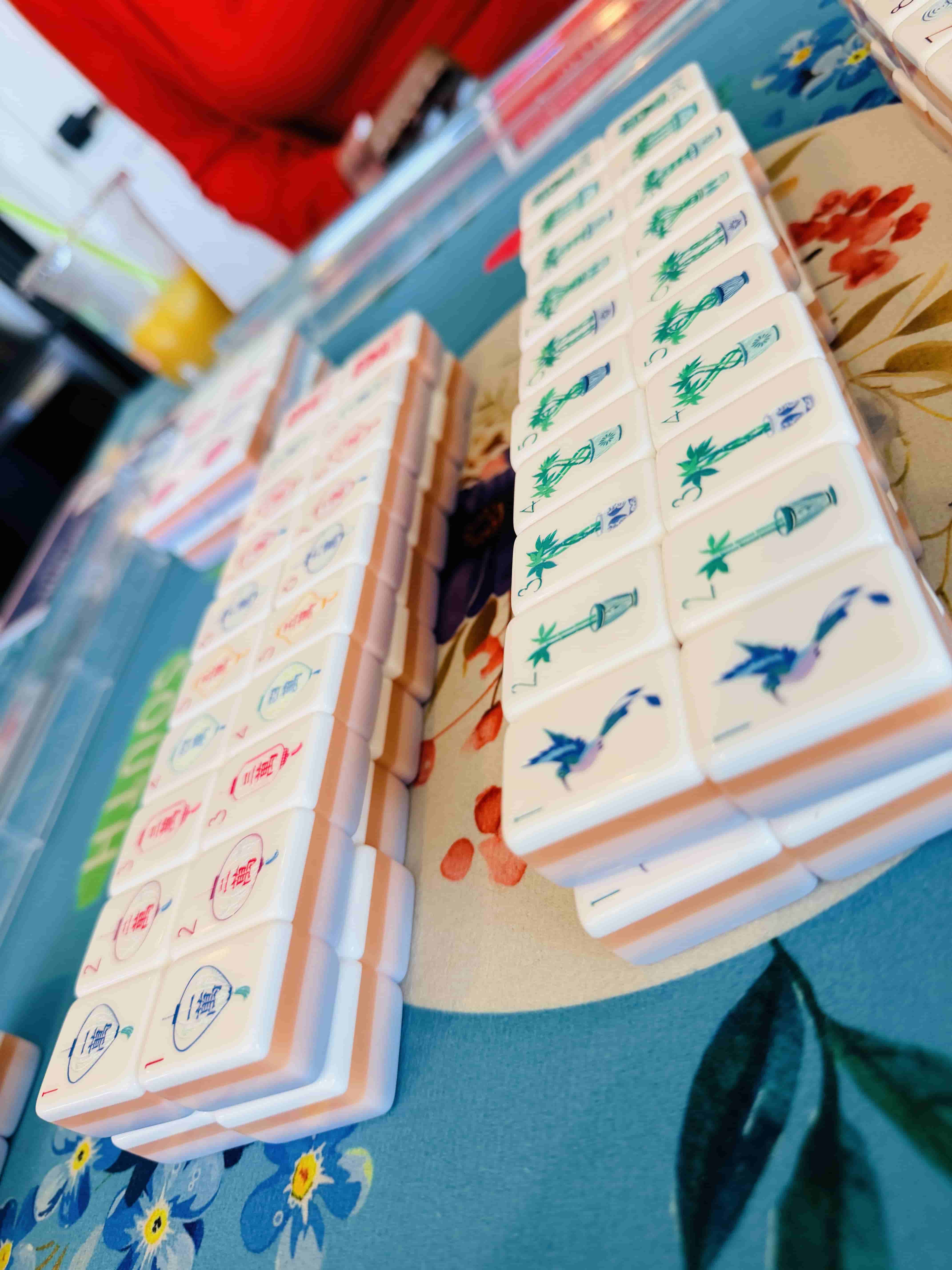
The method that works for beginners is subtraction, not selection. Instead of hunting for the hand you want, you eliminate the sections you obviously can't reach and then compare what's left.
- Sort your rack by suit and number. The shape of your hand becomes visible the second the tiles are in order.
- Notice the skew. Mostly evens? Mostly odds? A pile of one number? That points you at two or three sections, and you can ignore the rest of the card.
- Count distance. For each candidate line, count how many tiles you already hold. A hand you're four tiles from is a fantasy in the early game and a disaster in the late.
- Check the Joker rule. If your route depends on Jokers, cross off Singles and Pairs entirely.
- Keep a backup. Good players carry two candidate hands through the Charleston and commit to one only when the discards tell them which is live.
Concealed, exposed, and what the numbers mean
Each line on the card carries a point value, and hands marked C must be played concealed — no exposures — which is why they pay more. The practical consequence at the table: a concealed hand means you cannot call for a discarded tile to complete a group, so you're relying on the wall and on the Charleston to get there. Beginners underrate how much harder that is.
Why the card changes every year — and what to do about it
The League refreshes the card annually to keep the game from calcifying. For a player, that means an annual re-learning period every spring: your reflexes point at hands that may have been altered or dropped. Most players spend two or three sessions recalibrating.
That's a good moment for a session focused purely on the card rather than the mechanics. If you're returning after a long break, the refresher booking makes more sense than starting over from the tiles.
Learning the card in Las Vegas
Card instruction is taught hands-on, at a table, with the current year's card in front of every player — never as a lecture. It fits naturally into a first lesson (see what happens at a first mahjong lesson) and just as naturally into a session for players who already know the mechanics.
If you're brand new to all of this, start with learning mahjong in Las Vegas. If you're curious how a Chinese game ended up with an annual American rule card at all, the history of American Mahjong explains it.
Common questions
What is the National Mah Jongg League card?
It is the annual sheet listing every legal hand in American Mah Jongg for that year, grouped into sections such as year hands, 2468, Like Numbers, Quints, Consecutive Run, 13579, Winds and Dragons, 369, and Singles and Pairs.
How often does the NMJL card change?
A new card is issued every year and takes effect in the spring. Hands are added, altered and removed, so every player at the table needs the same year's card.
Can Jokers be used in any hand on the card?
No. Singles and Pairs hands do not accept Jokers, and some other lines restrict them. Checking the Joker rule is part of choosing which hand to chase.
Why do concealed hands score more?
Concealed hands cannot be completed by calling a discarded tile, so you depend entirely on the wall and the Charleston. The higher point value reflects the added difficulty.
Do I need to memorize the whole card?
No. Strong players scan for the two or three sections that match the tiles they already hold and ignore the rest. Fluency comes from repetition at the table, not memorization.
Make the card make sense
Book a session built around the current year's card — for brand-new players or for anyone recalibrating after the spring release.
Call or text Jessica Gitlin: 917-533-8690
Book a lesson at vegasmahjonglessons.com · Find Vegas Mahjong Lessons on Google Maps
Vegas Mahjong Lessons teaches American Mah Jongg using the current National Mah Jongg League card and is an independent instructor — not affiliated with, endorsed by, or sponsored by the National Mah Jongg League. Card sections and hands change annually; always play from the current year's card.
Ready to learn Mahjong?
Book a private lesson with Jessica at your home, hotel, Airbnb, or venue in Las Vegas, Henderson, or Summerlin.
Book a Private Lesson 🀄